The Hogan Cup: Brother Hogan and the Mullingar Connection
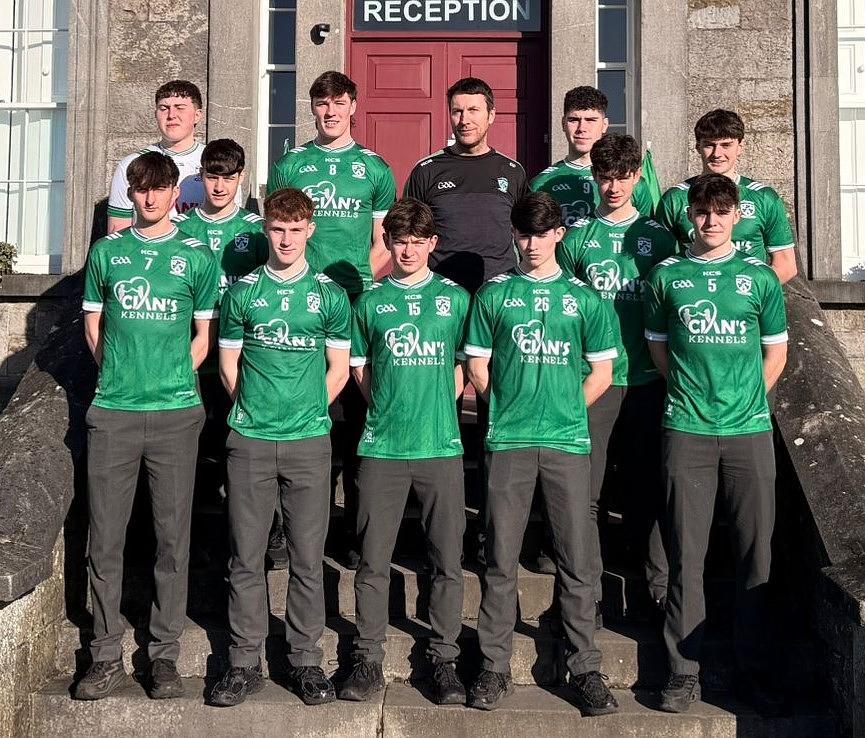
Finally, it has happened. Coláiste Mhuire Mullingar, the school where Brother Thomas Hogan (Brother Wilfrid) taught his final lessons will contest the final of the All-Ireland Post-Primary Schools football final on St Patrick’s Day. In 1946, the Central Colleges Council donated the Hogan Cup, the trophy awarded to the winners to honour the memory of the great Gaelic Games and Irish culture enthusiast.
Thomas Hogan was a native of Aughavaneen, Grangemockler, County Tipperary He entered the Christian Brothers in 1915 and graduated from UCD with a B.Sc. degree. Prior to his arrival in Mullingar, as Brother Wilfrid, he held teaching positions in Waterpark College (Waterford), Thurles, Westland Row and Fermoy. Hogan arrived in Mullingar with a reputation for the quality of his science teaching and as a man who had ‘conducted special science courses on a number of occasions in some of the country’s foremost educational institutions’. He was also renowned for promoting Gaelic games and the Irish language. Ironically, Brother Hogan was also committed to the great Victorian concept of Muscular Christianity and was a firm believer in the value of sports participation in positively moulding character.
His impact on the promotion of Gaelic football and hurling was greatest in Mullingar. He unleashed a tsunami of games promotional energy on his arrival in 1942 and his impact was almost immediate as he revolutionised the GAA in the town for a brief period. Brother Hogan began his GAA mission as soon as he realised the impoverished state of the organisation in Mullingar. Hurling and football street leagues were organised for adults, minors and schoolboys and these provided those who wished to play Gaelic games in the town with a programme of matches that were locally meaningful, regular in organisation and competitive. Those who weren’t anxious to play were also ‘encouraged’ to experiment with the games. Regular newspaper publicity added to the status of the street leagues and matches played by the Mullingar hurling and football clubs were also covered in the newspapers. Gaelic games in Mullingar were given a newspaper profile and a presence on the ground of unprecedented proportions. Young players might not have had their names in lights but at least they were in the local newspaper and for the times that was enough to enhance a young man’s status. The chief vehicle for this publicity was a weekly column in the Westmeath Examiner written by Brother Hogan under the pen name of ‘An Fear Faire’ entitled ‘With the Gaels of Mullingar’. Adult players from Mullingar who were attached to rural clubs were encouraged to return to the Mullingar club and during his time in Mullingar, senior hurling and football teams were fielded as well as teams in the lower grades.
A Games Promotion Officer and a PRO long before the positions were created, Brother Hogan also held the position of Chairman of the Mullingar Hurling and Football club. He was a colourful character who liked to patrol the sidelines dressed in his trademark long coat shouting encouragement to his teams to move the ball at speed. ‘Go tapaidh, go tapaidh’ was his favoured battle cry. A cigarette was never far from his lips. Under his influence, Mullingar won the county Senior hurling title in 1944 beating Ringtown in the final. The Mullingar club also contested the 1944 Senior County Football final but lost to Kinnegad when Tommy Lynch kicked a last minute penalty wide. It was claimed that sods were thrown at Lynch as he made his run to take the kick and this alleged action formed the core argument of the unsuccessful objection that followed that featured Brother Hogan at his argumentative best. This was his last significant contribution to the GAA in Mullingar and Westmeath as a serious illness brought his mission and teaching career to a premature halt.
Brother Hogan died in a Dublin nursing home on Tuesday 22 May 1945. His loss to the Mullingar GAA was inestimable. As the club notes recorded:
"The town and county had lost a great Gael, one of the most popular and energetic workers ever connected with the GAA in Mullingar and Westmeath. The Mullingar Club has lost the ablest Chairman it has known in its long history and our members and players, one and all, have lost a sincere friend".
Brother Thomas Hogan was a strong nationalist and a member of a family with impeccable nationalist credentials. He was a brother of Michael Hogan, the Tipperary footballer, shot by British forces in Croke Park on Bloody Sunday, 21 November 1920. In 1925, the GAA's Central Council took the decision to name a stand in Croke Park after Michael Hogan. Dan Hogan, Michael's older brother, worked on the Great Northern Railway in Monaghan and was active as an IRA volunteer during the War of Independence in Monaghan and Ulster. He joined the Irish Free State army and in January 1922, he was the one who raised the tricolour in Dublin Castle during the handover from British rule. He went on to become chief-of-staff of the Irish Free State army between 1927 and 1929. But, in an extraordinary incident, Dan Hogan allegedly punched the then Minister for Defence Desmond FitzGerald in a row over army pay. He immediately resigned his army post and emigrated to the United States immediately afterwards. For a time his army pension was addressed to Brother Wilfrid c/o Westland Row CBS.
In 1941, Dan Hogan joined the ranks of the disappeared. He walked out of his apartment and was never seen again.
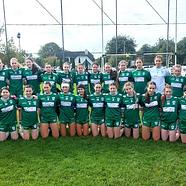
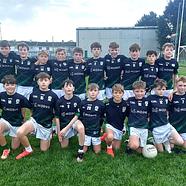
No doubt, Brother Hogan is smiling in whatever celestial platform he now inhabits, satisfied that the school where he taught his final lessons is contesting the All-Ireland final with eleven players from the Mullingar Shamrocks club and eight from the St Loman’s club part of the Coláiste Mhuire panel. He could never have imagined this when he arrived in Mullingar in 1942 and found the GAA in a very sorry state.
We wouldn’t dare tempt fate by suggesting that the stars are aligned.
Fógra: And of course several players from The Downs and Shandonagh are key panel and playing members but we wouldn’t dare suggest that they are Mullingar town clubs!